Dreaming of walking the historic halls of a UK medical school, training in the NHS, and earning a globally revered MBBS or MBChB? You’re not alone. The UK’s medical education is a beacon for international students, renowned for its rigor, clinical excellence, and the prestige of institutions like Oxford, Cambridge, Imperial, and UCL. But as a non-EU applicant, the path involves distinct challenges, costs, and processes post-Brexit.

This isn’t about selling a fantasy; it’s your practical roadmap to understanding what it *truly* takes to study medicine in the UK from outside the EU/EEA.
Why the UK? The Enduring Allure
- Global Recognition & Standards: A UK medical degree is a passport respected by medical councils worldwide (though licensure in your home country will still require specific exams). The General Medical Council (GMC) sets exceptionally high standards.
- Integrated Clinical Exposure: From early years, you’re immersed in the National Health Service (NHS), gaining hands-on experience in diverse clinical settings under expert supervision.
- Research Powerhouse: Access to cutting-edge medical research and innovation is embedded in the curriculum at leading universities.
- Quality of Teaching: Problem-based learning (PBL) and a strong emphasis on communication and ethics shape well-rounded future doctors.
- Cultural & Linguistic Advantage: Studying in an English-speaking country eliminates a major language barrier for many, and the UK offers a vibrant, multicultural student experience.

The Reality Check: Key Challenges for Non-EU Applicants
1. Stiff Competition:
- Limited Spaces: Medicine is the most competitive undergraduate degree in the UK. International student quotas are small.
- Academic Excellence Required: You’ll need near-perfect grades in science subjects (Biology, Chemistry, often Physics/Maths) equivalent to top A-levels (e.g., A*AA or higher). Your high school qualifications must be rigorously assessed for equivalence (UCAS tariff points).
- Entrance Exams: Almost all universities require either the UCAT (University Clinical Aptitude Test) or the BMAT (BioMedical Admissions Test). High scores are non-negotiable. Preparation is intense and costly.
- Interviews: Multiple Mini Interviews (MMIs) are standard. They assess communication, empathy, ethics, resilience, and motivation – demanding thorough preparation, often remotely.
2. Significant Financial Investment:
- Tuition Fees: This is the biggest hurdle. Non-EU international fees for medicine are substantially higher than for home/EU students. Expect £25,000 to £50,000+ PER YEAR for tuition alone (varies by university, with London/Oxbridge at the top end).
- Living Costs: Especially in cities like London, Oxford, or Cambridge, budget at least £12,000 to £18,000+ per year for accommodation, food, transport, books, and personal expenses.
- Immigration Health Surcharge (IHS): Mandatory for your Student Visa, granting access to the NHS. Currently £1,035 PER YEAR. Payable upfront for your entire visa duration.
- Visa Fees: Application costs add several hundred pounds.
- Total Cost: A 5-6 year degree can easily exceed £250,000+. Scholarships are scarce and fiercely competitive for medicine.
3. The Visa Journey:
- Student Visa (Tier 4): You’ll need an unconditional offer and proof of sufficient funds covering the first year’s tuition + living costs (held for 28 days minimum) before applying.
- English Language Proof: Usually IELTS Academic (typically 7.0+ overall, with minimums in each component) or equivalent.
- TB Test: Required if coming from a listed country.
- Biometrics & Processing: Allow ample time.
4. Post-Study Work & Foundation Training:
- The Graduate Route: Allows you to stay and work (in any field) for 2 years (undergrad) or 3 years (PhD) after graduation. This is your bridge.
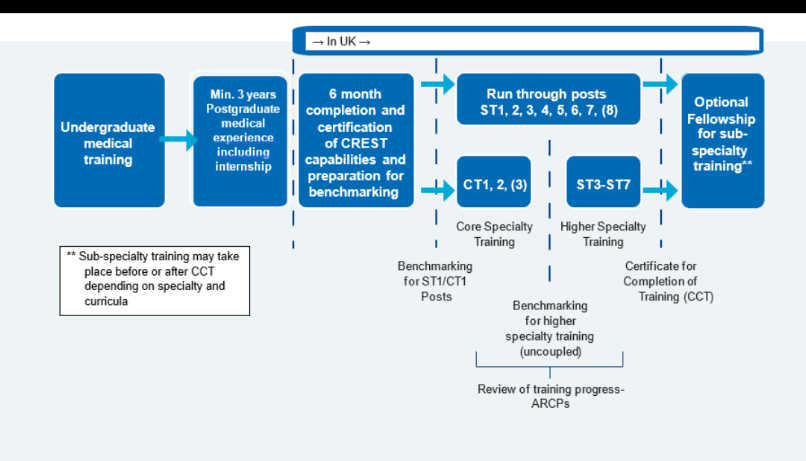
- Foundation Programme (FY1/FY2): To practice as a doctor in the UK, you must complete this 2-year paid training programme within the NHS.
- You compete in a separate, smaller allocation within the national application process.
- You need full GMC registration before starting FY1, which requires passing the PLAB (Professional and Linguistic Assessments Board) exams (Part 1 often taken during studies, Part 2 after graduation). This is a major additional hurdle.
- Visa sponsorship for the Foundation Programme is complex and not guaranteed.
- You compete in a separate, smaller allocation within the national application process.

The Non-EU Applicant Pathway: Step-by-Step
1. Research & Self-Assessment (Early – Years 11/12 or equivalent):
- University Shortlisting: Focus on universities welcoming internationals, check their specific entry requirements, fees, UCAT/BMAT policy, and course
structure. Use UCAS search tools. - Financial Planning: Be brutally honest about affordability. Explore all potential funding sources early (family savings, home country loans, rare scholarships).
- Academic Focus: Excel in core science subjects.
2. Prepare for & Take Entrance Exams (Year 12/AS Level equivalent):
- UCAT (July-Sept intake year): Widely used, computer-based. Requires dedicated prep (mocks, courses).
- BMAT (Nov intake year): Used by Oxbridge, Imperial, UCL, Leeds, Brighton & Sussex. Tests science, maths, critical thinking, writing.
3. Craft Your UCAS Application (Sept 1st Deadline for Medicine):
- Academic Reference: Must be stellar, from a science teacher.
- Personal Statement: Crucial! Demonstrate motivation, relevant experience (shadowing, volunteering), skills, understanding of medicine/UK NHS. Avoid clichés.
- Choices: Maximum 4 medical school choices. Choose strategically based on predicted grades, exam scores, and competition.
4. Interview Preparation (Nov-Feb):
- MMI Practice: Essential. Focus on ethics, NHS awareness, communication, handling scenarios. Practice with peers, teachers, or professional services.
5. Receive Offers & Meet Conditions (Dec-April):
- Conditional Offers: Usually require achieving specific grades in final exams and meeting language requirements.
- Unconditional Offer: Your golden ticket (if no conditions).
6. Secure Funding & Apply for Visa (After Unconditional Offer):
- Proof of Funds: Get documentation ready (bank statements meeting UKVI requirements).
- Apply for CAS: Your university issues a Confirmation of Acceptance for Studies.
- Apply for Student Visa: Submit CAS, financial proof, passport, TB test (if needed), pay IHS and visa fee. Attend biometrics appointment.
7. Prepare for Relocation & Studies:
- Accommodation, flights, orientation, NHS registration.
Life as a Non-EU Medical Student in the UK:
- Community: Connect with international student societies and medical student associations. Build a support network.
- Work: Student visa allows limited part-time work (usually 20 hrs/week during term, full-time in holidays). Balance is key – medicine is demanding.
- Culture: Embrace the experience! Explore the UK, engage with different cultures on campus and in the NHS.
- Plan Ahead: Start thinking about PLAB and Foundation Programme applications during your studies. The Graduate Route gives you time, but preparation is lengthy.
Is It Worth It? A Candid Perspective
Studying medicine in the UK as a non-EU student is an incredible opportunity, but it’s a massive investment of intellect, effort, and finances. It’s worth it if:
- You are academically exceptional and resilient.
- Your family can comfortably afford the entire cost without crippling debt.
- You are genuinely passionate about the UK system and potentially working there long-term (understanding the hurdles to Foundation training).
- You see the value beyond just the degree – the clinical training, research exposure, and international experience.
It might not be the best path if:
- Cost is a primary barrier with no secure funding.
- Your primary goal is to practice immediately in your home country (a local or cheaper international degree might be more efficient).
- You underestimate the intense competition and workload.
Your Next Steps with DoctorTravelLog:
Resources for Studying Medicine in the UK (for International Students)
- Use Our University Finder: Filter UK medical schools by international fees, UCAT/BMAT requirements, and location. Find the perfect fit for your goals and budget.
- Download Our Budget Planner: Calculate your realistic total costs (tuition + living expenses) for different universities before applying.
- Explore UCAT/BMAT Prep Resources: Access trusted prep courses and practice materials to improve your scores. (Includes affiliate links to recommended providers.)
- Book a UK Medicine Consultancy Session: Get personalized advice on your academic profile, application strategy, and university shortlist from experienced consultants.
- Join the Forum: Connect with other international applicants and current students. Share your journey, ask questions, and get real insights.

The UK medical dream is demanding, but for the well-prepared, determined, and supported non-EU applicant, it remains a profoundly rewarding journey. Arm yourself with knowledge, plan meticulously, and step forward with your eyes wide open. Your stethoscope awaits – are you ready for the challenge?
Got questions? Share them below or explore DoctorTravelLog’s dedicated UK Medicine section for deeper dives!
— Dr. Mohammad Rizwan Feroz
👍 Found this helpful? Show some love & follow us on Instagram @doctortravellog for expert tips & fresh updates!
💬 Got thoughts or questions? React below or drop a quick comment — no login needed!
❤️ 😮 🤔 👍 👎
 Doctor Travel Log